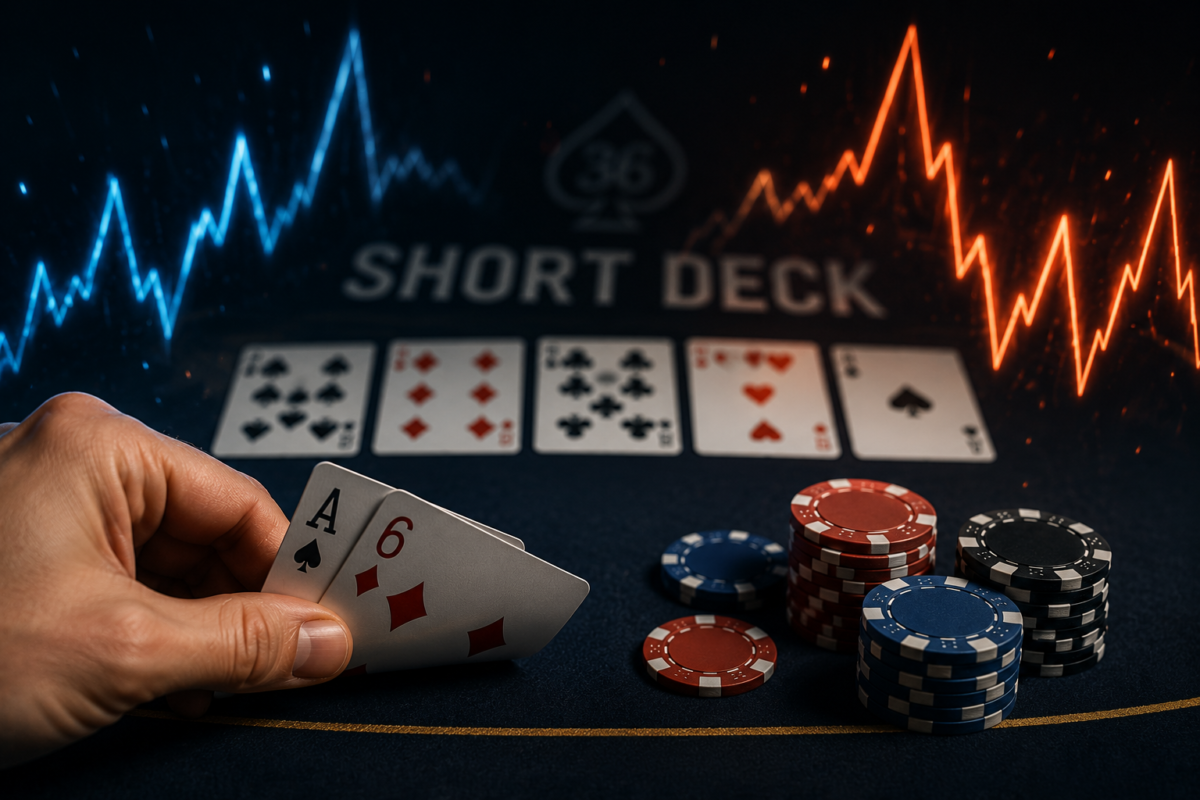
Short Deck (also called 6+ Hold’em) looks like Texas Hold’em after someone took a pair of scissors to the deck. It’s still two hole cards, five community cards, familiar betting streets. But the moment you remove the 2s through 5s, the whole ecosystem changes. Hands collide harder, equities run closer, and “I was a 70% favorite” starts sounding like a bedtime story you tell yourself after the river punches you again. If you’ve ever wondered why Short Deck feels like a rollercoaster, it’s not just your nerves. The math really is more volatile.
What “Short Deck” actually changes
A standard deck has 52 cards. Short Deck has 36 because it uses 6 through Ace only. That shrinks the card universe and increases the frequency of strong holdings. More high cards means more pairs, more big draws, more made hands by the river. In regular Hold’em, missing flops is normal. In Short Deck, you connect more often, and so does everyone else. That’s where the swinginess begins: more connection leads to more all-in spots, and more all-in spots lead to more variance.
Most Short Deck rules also tweak hand rankings. Commonly, a flush beats a full house because making a flush is harder when there are fewer suited cards available. Some rooms keep standard rankings, some don’t, which is a sneaky detail that can turn a “nice value bet” into a very expensive misunderstanding. Always check the table rules before you treat a flush like royalty.
Why equities run closer than you’re used to
In normal Hold’em, big pocket pairs often dominate. In Short Deck, they still matter, but they get dragged into knife fights more often. With fewer low cards, you see more “live” overcards and more powerful drawing combinations. That means situations like AA vs. suited connectors can be far more competitive than you expect. You’ll also run into more scenarios where two strong hands are basically flipping, not crushing.
Here’s the practical takeaway: in Short Deck, you should think in ranges and runouts rather than “I have the best hand now.” Because “now” doesn’t last long when the deck is packed with cards that complete straights and flushes.
The swinginess comes from three structural reasons
Short Deck isn’t volatile because players are reckless (though some definitely are). It’s volatile because the game is built for collisions.
- More premium-card density. When the deck is mostly Broadway and medium-high cards, flops hit harder. You’ll see top pair vs. two pair, set vs. draw, and big draw vs. big draw constantly.
- Draws have more equity. With fewer dead cards in the deck, draws often perform better. That makes “getting it in ahead” less comforting, because the “behind” hand is frequently not that far behind.
- All-ins happen earlier. Because strong hands and strong draws appear more often, stacks go in more often. More all-ins equals more variance. It’s not philosophy, it’s volume.
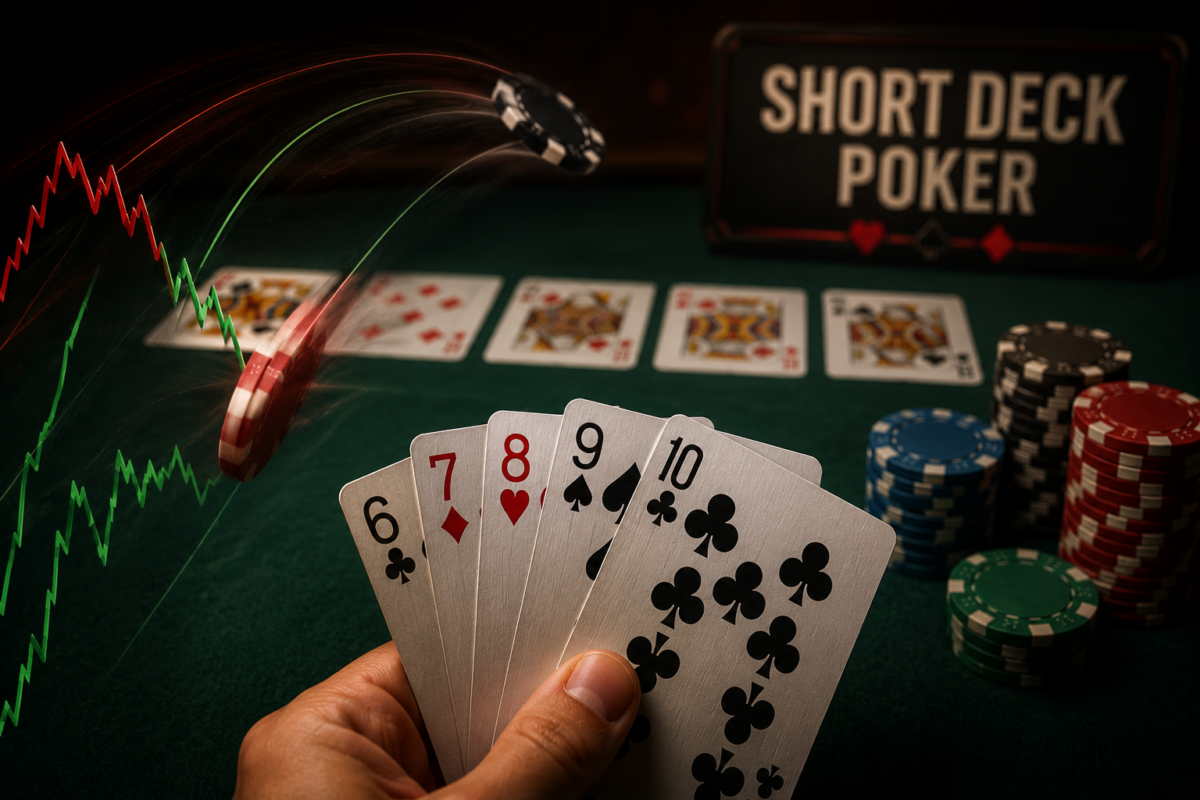
A quick comparison table that explains the vibe
| Feature | Texas Hold’em | Short Deck (6+) | What it means in practice |
|---|---|---|---|
| Cards in deck | 52 | 36 | Boards connect more often |
| Frequency of big hands | Lower | Higher | More multi-way chaos |
| Typical equity gaps | Wider | Narrower | “Favorites” lose more |
| Hand ranking (often) | Standard | Flush > Full House (common rule) | Misreading rules is costly |
| Style pressure | Patience rewards | Pressure rewards | More betting, more swings |
Two common misconceptions that cost people money
Short Deck attracts players who love action, and action has a way of rewriting logic. These are the two errors I see most often when people jump from Hold’em to 6+.
- Treating pocket pairs like a fortress. AA is still strong, but in Short Deck it gets cracked in more believable ways. If you keep stacking off like it’s standard Hold’em, you’ll feel “unlucky” forever, when the truth is that the game simply offers opponents more equity more often.
- Ignoring rule variations. Flush beating a full house is not a small footnote. Neither are straight rules in some formats (some games treat A-6-7-8-9 as the lowest straight, depending on house rules). If you play across different rooms—online or live—you need a 30-second rule check before you start making confident decisions.
Two lists you actually want before you play a real session
Checklist for reading a Short Deck table in 30 seconds
- What beats what: flush vs. full house ranking
- Minimum buy-in and typical stack depth (shallow stacks swing harder)
- Ante structure (many games use antes; it inflates pots)
- Rake or fees (short decks can feel “fun” until fees eat thin edges)
- Rebuy rules and timebank limits (especially online)
Bankroll and mindset rules that stop you from spiraling
- Expect bigger downswings: your “normal” variance model is outdated
- Set a stop-loss that’s based on buy-ins, not emotions (e.g., 3–5 buy-ins)
- Avoid chasing: Short Deck punishes tilt because edges are thinner
- Track sessions in hands played, not in “how it felt”
- Don’t mix formats mid-session; switching from 6+ to Hold’em ruins discipline
Where “safe online casinos” fits into a poker conversation
Even though Short Deck is a poker variant, you’ll often see it offered in the same ecosystem as casino products. If you’re playing it online, the same practical rule applies as with any wagering product: stick to safe online casinos and platforms that are licensed for your region, clearly state rules, and don’t hide fees or payout conditions behind vague menus. Short Deck has enough built-in volatility—your provider shouldn’t add extra chaos through unclear rules, questionable limits, or shady cashout practices.
How to play Short Deck without getting emotionally wrecked
You don’t “solve” Short Deck by becoming more stubborn. You survive it by respecting that the game is designed to create frequent, high-equity confrontations. That means your best decisions will still lose often. It also means that discipline is worth more than swagger. If you bring a Hold’em mindset of “I’m ahead, therefore I deserve this pot,” Short Deck will take your certainty, fold it into a paper plane, and throw it into the river.
Play it like a high-variance format on purpose. Expect turbulence. Choose spots where you have strong equity against ranges, not just a pretty hand. And when the deck reminds you that favorites don’t get promises—only probabilities—don’t panic. That’s not a bug in Short Deck. That’s the whole point.